Monday, March 14, 2022

Hunger for a More Fruitful World

 by Bacopa Literary Review 2021 Poetry contributor Frederick Livingston

Over the course of several weeks in late winter, I noticed the apples, plums and pears come alive in my new home on the Northern California coast. I struggled to understand the phenomenon at first. It didn't feel like spring yet and I was concerned that an unexpected frost might shatter this frail unfurling. Slowly, I noticed other plants revealing flowers, until eventually the landscape was covered in color. Suddenly spring felt definitive.

I wondered what would have happened if the fruit trees, with their long sense of time and deep roots, never took the first steps from winter to spring. Would the other flowers find that courage themselves or would they stay waiting for a more fruitful earth? It struck me how flowers, not leaves, were the first to emerge from buds, proving dreams precede the means.

Maybe there is a signal the trees feel that I do not, but I could not avoid the parallels between the bravery of this beauty and the question of how societal change occurs in an environment of cold uncertainty. Studying ecology and peacebuilding has shown me many paths to despair, but witnessing this unguarded faith in the future gave me a powerful example of how hope shapes our world.

            Pear Blossom
       Mendocino, California

this tree could be dead
or dreaming
...
what would the Earth look like
if all of us had such courage
to offer our most tender selves
not only when spring is certain
but when we can no longer bear
our hunger for a more fruitful world?

*     *    *

Frederick Livingston plants seeds in the liminal space between food justice, ecology, and peace. His work has appeared in literary magazines, academic journals, public parks, and bathroom stalls. Compelled by the power of metaphor to shape our world, he hopes to share in telling new stories.


Monday, March 7, 2022

Our Connection to Ancestors

by Bacopa Literary Review 2021 Poetry contributor M. Cynthia Cheung

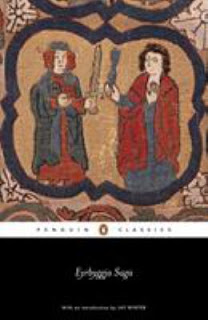
The Eyrbyggja Saga survives in fragmentary manuscripts written in Old Norse, the oldest part of which is thought to date from the thirteenth century. The Saga mentions the two berserkers that appear in my poem "Sightseeing," and anyone who travels to Iceland today can see the Berserkjahraun lava field, including the path the men were said to have made. 

Icelanders today can still read the Sagas directly in the original language. Just imagine the equivalent for modern English speakers like ourselves--being able to understand and savor Beowulf, or even Chaucer, without any translation! How do we, as individuals, cope with the inevitable changes that time brings to memory, myth, and language? Should we strive to maintain a connection to our ancestors--whether linguistic, cultural, spiritual, or biological--and if so how do we go about it?

I have no answers, of course. What I do know is that the time my husband and I spent walking along that path is now one of my most treasured memories!


 *     *     *

M. Cynthia Cheung is a physician whose writing has appeared or is forthcoming in RHINO, Sugar House Review, Zรณcalo Public Square, NOON: the journal of the short poem, The Journal of the American Medical Association, and others. Find her on Instagram @zoologicapoetry.


Sunday, February 27, 2022

Writing "Dream Catcher"

by Bacopa Literary Review 2021 Fiction contributor Elizabeth Christopher

I started writing "Dream Catcher" a couple of months into the pandemic. We had been nestled at home together for weeks--my three kids, my husband, and I. My husband soon returned to work outside the house, but I never did. Rather, my office became a refinished room in the attic, where I wrote copy for a technology company during the day and worked at my fiction before sunrise and late at night.

When we had a COVID scare, I also slept in that attic room. Though I was self-sequestered, I became aware that I wasn't alone. I heard "wings beating behind plaster and lath" in the wee hours of the morning. One time, I got out of bed, crept across the dark room, tapped on the wall, and waited for a response. None came. But eventually a story did.

The story was about a woman older than I am. Her house was an empty nest, unlike mine. Her children no longer "fluttered around these rooms" like mine still do. Yet, alone in my attic space, I could feel her loss, her grief for her grown children who had flown off to faraway places, and I imagined the regret she might feel for those times she resented them, when they were small and "their presence felt heavy."

They were always climbing into my lap pulling at my arms. The air in these rooms was thick with their wanting. It was like gravity.

The guilt from her belief that she drove them away weighed on this woman, as did the guilt of killing the mice whose feces she found in her muffin tins, "like some miniature game of Mancala." But she would not make that mistake again. She'd protect those "small downy bodies huddled in a thatch of leaves and insulation" within her walls, those mice whose teeth made "sunbursts" in her cereal bag, and that bird that crashed into her window like "a tennis ball's thwack."

It's no wonder that birds flew into many of the pieces published in the 2021 edition of Bacopa Literary Review as the editors noted in their foreword. The pandemic sent us indoors, leaving us to look out at a smaller, more intimate world from our windows. What I saw, and I guess what many others did too, were birds--birds persisting in their nest building, in their singing, in their fluttering--day after day, season after season. How their small, nearly weightless forms unsteadied me and filled me with hope, just like stories do.

*     *     *

Elizabeth Christopher is a freelance writer living in Melrose, MA. Her stories and essays have been published in HuffPost, The Writer, Obelus Journal, and elsewhere. See more at Elizabeth Christopher's website.


Monday, February 21, 2022

"Virtual Season: 2020"

by Bacopa Literary Review 2022 Poetry contributor Helen Bournas-Ney

In the first year of the pandemic, before there were vaccines and therapies, or anything we thought could help—we were careful and in retreat from the world most of the time in our apartment in New York City. During this period, my husband and I would sometimes venture forth to the open spaces behind our apartment building to get some sun and to see our masked friends and neighbors walk by. We would take our retro folding chairs with us and try to enjoy what we could during those stressful days.

As the afternoons wore on and this grassy area was thrown into shade, we would pick up our folding chairs and follow the sun, moving to our parking lot, which was unshaded by trees and so much warmer.

In that parking lot, the sun would warm us and we would feel the joy of the day, an extended day. This felt like a short-lived but lovely escape from the chaos and fear surrounding us in the early months of lockdown. Here you could forget about it all and just lift your face to the sun.

Small pleasures. And looking where to find them—to figure out just where to put my chair. / I think it must be anywhere that sun allows.

*     *     *

Helen Bournas-Ney was born in Ikaria, Greece, and grew up in New York City. She received the Anais Nin Award for her work on Rimbaud and George Seferis. Most recently, her work has appeared in Plume Online, The Ekphrastic Review, Ekphrastic Writing Responses: Edward Hopper (18th poem down on the page), One Sentence Poems, Mom Egg Review, and the anthology "Plume Poetry, 7."

Read Bournas-Ney's "Virtual Season: 2020" and other fine Poetry, Prose Poetry,
Fiction, and Creative Nonfiction in Bacopa Literary Review 2021

Monday, February 14, 2022

Not Naming, Not Knowing

by Bacopa Literary Review 2021 Fiction contributor Shuly Xรณchitl Cawood

I never know where a story will go when I sit down to write. All I ever have is a situation. I don't know the backstories of the characters--I learn as I write, figuring out their secrets, their fears, their losses, and what brought them to the situation in the first place.

When I started to write “Not Naming It” (which was of course untitled at the start since I didn’t know what the story was about), all I knew was there was this young couple, Marisol and Elton, and they were buying a farm in the middle of nowhere after being city dwellers, and there was a cat involved—a cat that one member of the couple didn’t want. Even in the first draft I wrote, this was the first line I set down on the page: “The cat came with the farm. A stipulation.”

Why was this cat important? And what would make two people give up the life they had and move to the middle of nowhere?

I found out as I wrote. Now this story is part of my second short story collection, and the stories are all linked. In some cases it took me a while to figure out how some of these characters knew each other.

Not knowing is the fun of writing to me. In all other areas of my life, I want to know as far in advance as possible about everything. I can’t stand not knowing. When I was in the dating world, I would try and guess what would be the reason for the breakup that was likely to come eventually. I can’t remember a time when I didn’t guess correctly. When I met my husband, I couldn’t figure out what would break us up—though I did try.

Sometimes it’s best not to know in advance. In writing, that is definitely the case for me.

  *   *   *

To learn more about Shuly Xรณchitl Cawood, go to www.shulycawood.com.

Read Shuly Xรณchitl Cawood's "Not Naming It" (pp. 80-85) and other fine Fiction, Creative Nonfiction, Poetry, and Prose Poetry in Bacopa Literary Review 2021


Monday, February 7, 2022

Our 2022 Editorial Team

We're excited at Bacopa Literary Review to introduce a talented and varied team

Editor-in-Chief J.N. Fishhawk is a poet and freelance writer. He is the author of two poetry chapbooks and Postcards from the Darklands--ekphrastic poems accompanying artwork by artist Jose Ibanez. Fishhawk and illustrator Johnny Rocket Ibanez published their first-in-a-series children's book Billy & Tugboat SallyForth in 2020. Information at fishhawkandrocket.com. 

Associate Editor Mary Bast's creative nonfiction, poetry, and flash memoir have appeared in a number of print and online journals, and she's author, co-author, or contributor to eight professional books from her career as a psychologist, leadership consultant, and Enneagram coach. Bast is also a visual artist.

Managing Editor Tessa Walters is a poet, writer, and songwriter living amongst the orange trees. They enjoy writing anything from poetry to fiction to plays. Their favorite work is Shadow, a play they wrote at fifteen and produced at eighteen which explores how depression can feel like purgatory. Whether they're recording original songs in the voice notes on their phone, hosting a Poetry Jam at the CMC, cuddling up with a library book, baking a bundt cake or pulling needle through thread, Tessa is presently enjoying life as a rebel without a clue.

Fiction Editor Alec Kissoondyal is a student at the University of Florida currently pursuing an undergraduate degree in English. He is also a writer for Narrow Magazine and an ambassador for the Florida Hemingway Society. His short story, "Smudge," was published in the 2021 issue of Bacopa Literary Review. He has forthcoming publications to be released in Drunk Monkeys Magazine, The Bookends Review, and The Underground.

Creative Nonfiction/Humor Editor Stephanie Seguin studied English Literature and French at the University of Florida. She has published humor, short fiction, and personal memoir and spent over 15 years as a freelance editor and teacher of languages.

Poetry Co-Editor Oliver Keyhani is a visual and performance artist, poet and writer. He spends his time wondering about the spirits that put objects around us that cause us to stub our toes and funny bones, or those ghosts that pull out the chairs from under us just as we are about to sit. He can be found studying things and drinking hot chocolate. 

Poetry Co-Editor Reinfred Addo is a Ghanaian-American writer. He is the author of the poetry collections Washed Over and The Dedicadas (shortlisted for the GAW Literary Awards and finalist in North Street Book Prize). His work, including his health humanities creative writing, has been published in various publications and by various organizations such as Tampered Press and Signs of Life: An Anthology. Addo's favorite poetry communities in Gainesville are Thursday Night Poetry Jam (at the Civic Media Center), ARTSPEAKS, and Dopen Mic.

Monday, January 31, 2022

Hero's Eyes

by Bacopa Literary Review Fiction contributor William Nuessle

Jessie tipped her gauntleted hand carefully so the peregrine falcon would step off onto the fence post and grip the wood with all six razor-sharp talons. Heronimus settled on her perch, scissoring her blue-gray wings behind her back, studying her master with eyes of yellow-rimmed obsidian.

"You can do this," the falconer-in-training whispered to both of them.

Jessie is the main character in a (so far) unpublished novel written in 2020; by the time that story is taking place she is nineteen and a fully trained falconer. At some point after the manuscript was finished and resting, I realized that I wanted to know about this moment--when she and Hero had their first flight.

Pulling a gobbet of raw meat out of the pocket, she placed it in her gloved fingers where Hero could see and whistled down-up-down like they'd practiced over and over.

Without hesitation Hero leaned off the post, her talons scratching the wood. A rapid whumpwhumpwhump of powerful wings, a lifting of taloned feet later and Hero was feeding, the comforting two pounds returned to Jessie's wrist.

"Well done, my love," she whispered, elated.

The moment in and of itself was worth a close look, but the chance to also further explore the tempestuous relationship between Jessie and her mother offers (one hopes) a layer of depth to an already interesting story.

*    *    *

Will Nuessle holds a third-degree brown belt in ninjitsu, rides a Harley, primary caregives three little boys, and claims he can recite the alphabet backwards in less than thirty seconds. More of his writing may be found at Will's Worldwide Writing -- The Story So Far.

Read William Nuessle's "Hero's Eyes" (pp. 136-138)
and other fine Fiction, Creative Nonfiction, Poetry, and Prose Poetry
in Bacopa Literary Review 2021


Monday, January 24, 2022

Warning

 by 2021 Poetry contributor Carolyn Martin

Stories from National Geographic have often inspired my poems including the one published in the 2021 edition.

"Warning" was prompted by a statement in Jodi Cobb's article, "Strange Reflections" (March 2019), which I used as the poem's epigraph:

When confronted with the limits of the known world,
a 16th-century European cartographer inscribed the warning
"Here Be Dragons" on a small copper globe. Beware: What lies
beyond is unexplored--and perilous.

"Warning" begins with the challenge to find a vantage point high enough to see the horizon where we can ". . . wait   for flames   four legs/ a scaly frame. . ."

It ends, however, with the realization that the perils in this century are not unexplored dragons, but they lie in realities ". . . like love/and loss   grief and regret   prejudice and hate . . ." These are "lurking nearby" in the "world-at-hand" and need to be explored.

Here's another poem prompted by the National Geographic and links to poems recently published in The Phare, One Art, and The Headline Review.

*    *    *

Carolyn Martin is a lover of gardening and snorkeling, feral cats and backyard birds, writing and photography. Her poems have appeared in more than 130 journals throughout North America, Australia, and the UK. She is the poetry editor of Kosmos Quarterly: journal for global transformation. Find out more at Carolyn's website.


Enjoy Carolyn Martin's "Warning" and other fine Poetry,
Prose Poetry, Fiction, and Creative Nonfiction
in Bacopa Literary Review 2021


Monday, January 17, 2022

In Front of the Full-Length Mirror

 by Bacopa Literary Review 2021 Creative Nonfiction contributor Jennifer Lang

"In Front of the Full-Length Mirror" was many versions before this one. I started it during my MFA as a rough guide to my body, each scar with its own story, twisting and turning through time. 

Only years later did I understand how un-unique my story is after reading Dana Jennings' "Our Scars Tell the Stories of Our Lives" in The New York Times and David Owen's "Scars: A Life in Injuries" in The New Yorker. 

Still, I stuck with it. Compelled to write about my marks. Despite numerous iterations, the structure stayed intact: from foot to head, nonlinear, that ended where I intended.

But between the time I started this essay in 2015 and finished it in 2020, I had a wake-up moment that altered the focus and changed the tone: the phone call from my dermatologist about the melanoma, followed by nine stitches and cancer screening. I went back into the story to add the first scar, the hardest one to live with, the one of morbidity and impermanence, adding lines like:

"Death is like looking in the mirror, seeing our deeper selves, the bare-bones truths. I am dying, my wounds evidence of this promise. They remind me of my fragility, my inability to stop nature."

After loads of rejections, I am thrilled my essay found its home in Bacopa Literary Review.

*     *     *

Jennifer Lang's essays have appeared in Under the Sun, Ascent, and Consequence, among other publications. Read more of her work at Israel Writers Studio and reach out to Jennifer on her Facebook and Twitter pages. 

Read Jennifer Lang's "In Front of the Full-Length Mirror" and other
compelling Creative Nonfiction, Fiction, Poetry, and Prose Poetry
in Bacopa Literary Review 2021.

Monday, January 10, 2022

Oh. There Is No Going Back

 by Bacopa Literary Review 2021 poetry contributor Megan Wildhood

"Oh. There Is No Going Back" came to me in an instant, nearly whole, on the day in April 2021 when I realized that we as a society are never going back to normal. I had long since stopped wiping down every screen and surface with hydrogen peroxide and I wasn't washing my hands raw every 12 hours anymore like I had the previous year, but I had truly thought that the end of this would at least be in view by the second Easter after the dawn of COVID.

It was starting to happen anyway, but the pandemic turbo-charged the demolition of my self-concept politically, which has ended up rewriting everything else about who I thought I was up until the advent of the pandemic era. 

On that unusually clear day, Oh. There Is No Going Back came to me in almost the exact way it was published. I felt my relationship to the future change. It was bigger than no longer being able to walk people up to the gate at the airport. So much was being disfigured about current life and the future.

Too much.

And I hadn't seen it. Until the day Oh. There Is No Going Back came to me. I had still been trusting that there was.

*     *     *

Megan Wildhood is an erinacious, neurodiverse lady writer in Seattle who helps her readers feel genuinely seen as they interact with her dispatches from the junction of extractive economics, mental and emotional distress, disability, and reparative justice. She hopes you will find yourself in her words as well as The Atlantic, Yes! Magazine, Mad in America, The Sun, and elsewhere.


Read Megan Wildhood's "Oh. There Is No Going Back" (p. 1) and other compelling
Poetry, Fiction, Creative Nonfiction, and Prose Poetry
in Bacopa Literary Review 2021


Tuesday, January 4, 2022

Huitzilin

 by 2021 Fiction First Prize winner Tomas Baiza

I've loved hummingbirds ever since I was a child. I was never obsessed with them, but whenever one buzzed by, I would stop whatever I was doing and watch in mute awe. 

Everyone I knew seemed to infantilize them as cute or adorable, as if they existed for our entertainment. To me, though, they were fast, strong, and courageous. 

Their aggressiveness was somehow benevolent, serious but good-natured, and their jewel-like colors were so bright I could see their sparkling feathers even after I closed my eyes.

We spin and joust. Our kissing shrieks bounce off the kitchen window. Her long beak jabs and thrusts, black eyes wild and dancing in her emerald green crest.

I can't remember when or from whom I learned that the native people of central Mexico venerated hummingbirds as the reincarnated souls of fallen warriors, returned for but a short time. All I know is that it made perfect sense--there could be no better explanation for their furious energy, their frantic need to hurry before being called to their next adventure.

Hummingbirds didn't simply exist. They had a purpose.

I'm trying to teach you," my Papi said. "When we leave this world, He waits. He is patient. Your abuelita taught me that He lets us rest for exactly four years to the day and then brings us back to help Him. Since the beginning, m'ija, He honors us as huitzilin, as hummingbirds, His most honest and loyal warriors."

The first hummingbird I saw after my son died stopped me in my tracks. I stood motionless on the sidewalk near my home, silently pleading for it to come closer. It dipped to drink from a flower in someone's front yard, spinning round often to survey its surroundings. I started to shake with memories of holding my son, of humming a Mexican lullaby to him as the life passed from his body--and then reminded myself that this meeting was a blessing of sorts, that this huitzilin could have chosen anywhere to feed, but it chose this garden just as I walked past. I slowly approached and it rose to hover above the flower bed. The little warrior turned to face me, its wings a blur.

"Hi," I said, and it was gone.

I aim myself at the Sun and race to the only war that was ever worth fighting.

Above Tonatiuh's roar, Papi's last shout comes through. "¡Arriba, m’ija!"

And so, I become light.

*    *    *
 
Tomas Baiza was born and raised in San Jose, California, and now lives in Boise, Idaho. He is a Pushcart-nominated author whose short fiction and poetry have appeared in Parhelion Literary Magazine, Peatsmoke Literary Journal, The Rush Magazine, Obelus, [PANK] Magazine, The Meadow, The Good Life Review, Passengers Journal, Kelp Journal, The Write Launch, and elsewhere.


Read Tomas Baiza's "Huitzilin" (pp. 156-160) and other Fiction,
Poetry, Creative Nonfiction, and Prose Poetry
in Bacopa Literary Review 2021
 

Sunday, December 26, 2021

Examining Chance and Fastening it with Future

 by Bacopa Literary Review 2021 contributor Mandira Pattnaik

When I was asked to write what led to my fiction piece "Box," I really had no clue. Did it germinate out of the cookery shows on TV I'd watched as a young girl growing up in India, newly open to global cultures, and international icons through the liberalization of the economy? Or was it fancying an unachievable dream that's bound to collapse, given the constraints under which children in these parts grow up? 

I'm not sure which, but to write it in future tense, as if happening in an imaginary time through the eyes of this motherless boy, felt the most natural thing to do.

The small-town conversations I've heard on my commutes form an essential part of this story:

     Once inside the bus, he'll survey the passengers' faces, boarding and de-boarding, in the dim light of pre-dawn. The 5:45 will snake down the curve of the hill, climb onto the next and next. Most will not bother about the boy travelling alone, but the butcher will recognize him.
     "Where to?" he'll ask. The boy will cook up a story about an ill grandmother.

     "Never had a Granma, did you? She lived across the border, been dead long, no?"
     "Sorry, she's--she's--an aunt, mother's third sister. Fractured hips."
     "Oh, I see. But where's your father?"
     "Home. Old enough to go alone!"

The picture of an exquisite countryside, the bustling eatery by the roadside, the apple orchard are all drawn from my travels within India.

     The bus will leave the perches of the hills, slither into the plains where the district town the boy has never been before will have just woken up. At a bustling eatery, he'll get off with the others, trailing one particular family with three howling toddlers...

The story ends with a note, open to interpretation:  

     The tight box in life nobody escapes out of.

These themes of fate, choices, and one's own endeavors find expression in several of my published stories available online through my blog. 

*   *   *

Read Mandira Pattnaik's "Box" (pp. 30-32) and other Fiction,
Poetry, Creative Nonfiction, and Prose Poetry
in Bacopa Literary Review 2021


Monday, December 20, 2021

Dying Back

by Bacopa Literary Review 2021 Poetry contributor, Patrick Cabello Hansel

I wrote "Dying Back" after several days of walking through my neighborhood, and sitting on our porch watching the beauty of autumn. It struck me, as I say in the poem, that the process . . .

. . . ordered by an ancient
call: earth and her creatures
loosing what they love to die back
into winter

I don't understand it, and maybe they don't either, but . . .

                               Every autumn
their goodbyes ravish our eyes
with color.

*   *   *

Patrick Cabello Hansel is the author of the poetry collections The Devouring Land (Main Street Rag Publishing) and Quitting Time (Atmosphere Press). He has published poems and prose in more than 70 journals and has received awards from the Loft Literary Center and Minnesota State Arts Board.


Read Patrick Cabello Hansel's poem and other exciting
Poetry, Prose Poetry, Fiction, and Creative Nonfiction
in Bacopa Literary Review 2021


Monday, December 13, 2021

Disagreeing with Gandhi

by Bacopa Literary Review 2021 contributor Jessica Barksdale

My poem, "Disagreeing with Gandhi" emerged from an online writing workshop put together by the good folks at Two Sylvias Press.

The prompt asked us to examine a quote, and I found one from Mahatma Gandhi: "You must not lose faith in humanity. Humanity is an ocean. If a few drops of the ocean are dirty, the ocean does not become dirty."

At the time, his words did not sit well. Of course, who was I to argue with Gandhi? But it was my feeling that we are all turned from clean to dirty by the acts of a few. Things seemed, at the time, to be going wrong in so many ways: politically, environmentally, personally.

Most pointedly for me was writing about my mother, who continues to slip into a different and new person due to dementia, one who doesn't know who I am. In that way, my connection to her, the world, and the planet seemed to be growing faint. 

My poem lists a number of other wrongs, highlighting the fact that if things are broken, it is our collective fault. I wrote:

Hear the gulls caw
their hunger. Step over
bits of plastic, twists
of dried kelp.

Things are discordant, empty, trashed, but I called for a fix with the last lines: "The ocean is dirty now. / We are all part of the ocean," meaning we are all affected by each other's actions. We are living in "dirty" times, and we have to accept and move onward, together.

As for my mother and my understanding of her and her experience, I keep writing. Recently published in Revolute, my poem "Alice Takes Her Mother to a Funeral" continues my examination of my confused feelings. We are all still in the ocean, swirling together, dirty and living.

*   *   *

Jessica Barksdale's fifteenth novel, The Play's the Thing, and second poetry collection, Grim Honey, were published in Spring, 2021. Recently retired, she taught at Diablo Valley College in Pleasant Hill, California for thirty-two years and continues to teach novel writing online for UCLA Extension and in the online MFA program for Southern New Hampshire University. Born and raised in the San Francisco Bay Area, she now lives in the Pacific Northwest with her husband.

 Read Jessica Barksdale's poem and other exciting
Poetry, Prose Poetry, Fiction, and Creative Nonfiction
in Bacopa Literary Review 2021


Tuesday, December 7, 2021

You Don't Always Know Where a Poem Will Go

by Bacopa Literary Review 2021 Poetry Second Prize winner Shoshauna Shy

When I began the poem "Key Lime Pie," I had no inkling of where I wanted it to go, not even what I needed to say. I just knew I wanted to capture an overwhelming happiness that I felt--something I hadn't felt for awhile--before it slipped away. It was that same kind of heady glee that compelled Joni Mitchell to write "Chelsea Morning," so that's what I referred to.

I could not have predicted that in a poem about joy, lone snipers would make an appearance, and manage to fit: . . . another snubbed American male / sprays a school, a theatre, a hot yoga studio with bullets. Nor that Nazis would, as well: . . . when / Anne Frank's diary was yanked from her hands . . . but somehow this poem was about them, too. 

And from there came the bigger references to God's involvement, and a visit from my deceased father: . . . in my joy the way when last December, my dead father joined / me . . . That's what I love about writing poetry: You don't always know where it will take you, nor where you'll end up!  


*   *   *

Shoshauna Shy's poems have been published widely, made into videos, displayed inside taxis, and plastered onto the hind quarters of city buses. Author of five collections of poetry, she is the founder of the Poetry Jumps Off the Shelf program, and the Woodrow Hall Top Shelf Awards. Recent publications include "Comfort Words & Cherries;" "No Encore, Christmas Eve at the New Girlfriend's Parents' House," "Tidings of Comfort and Joy;" and "What Happened to My Parents After They Gave Me Up."


Wednesday, November 17, 2021

There Are No Bad Genres

 by Bacopa Literary Review Associate Editor Mary Bast

". . . realism was the preferred mode of twentieth-century modernism. By relegating fantasy to kiddylit. . . The word genre began to imply something less, something inferior, and came to be commonly misused, not as a description, but as a negative value judgment. . . There are many bad books. There are no bad genres." 

~Ursula K. Le Guin, "Genre: A Word Only a Frenchman Could Love," Words Are My Matter

I'll admit, I've been one of those literary elitists who relegated anything but realism to the trash, in spite of being in awe of Ursula le Guin since I was able to read, and a devoted follower of Margaret Atwood since I saw the light of feminism. (Even Atwood has argued that her works are "speculative fiction" and not "science fiction").

As with any change in opinion, only continued expsure will break down the grooves our brains have carefully dug over lifetimes of being influenced by family, teachers, and literary society's votes about the "best" authors (those who vote being part of the social system that has defined "best" in the first place).

That change is now--however slowly--happening. I've recently finished reading Anthony Doerr's  novel, About Grace, whose protagonist wanders the world trying to change the fate his prophetic dreams have proven will come to pass. The New York Times, obviously considering this work a "good" genre (Doerr later won a Pulitzer Prize for All the Light We Cannot See), described About Grace as "an infinitely subtle algebra of resonance and sympathy between minds, lives, objects, light, senses, weather." 

While Doerr's brilliance as a writer makes it easier to expand our view of what kind of writing can be considered "literary," it wouldn't be fair to expect all writers who toy with so-called reality to reach his level of eloquence. In fact there are many excellent writers who "speculate" about possibilities, and we offer several in this year's Bacopa Literary Review, including both of our Fiction prize winners.

Fiction First Prize winner Tomas Baiza's "Huitzilin" begins with a rebirth:

Sunlight pools, trickles, and then begins to spill over the edge of the mesa. No sooner am I reborn than I am drawn to it, as I am drawn to the flowers that grow in my father's yard. Sun and nectar, Tonatoih and xochinecutli, both of them fuel for the returned warriors, we who have been summoned to face our shames before being called to fight. . .

Already curious about the nature of these "warriors," readers are given an intimation in the second paragraph that this beautifully rendered story will take us somewhere entirely new:

In the kitchen window, my reflection, an orange spark and wings that slash like the flint knives of our ancestors, the obsidian blades that opened veins of eternal life onto the tongue of the Sun Stone.


In "The Vanishing Heart," Fern F. Musselwhite's Fiction Second Prize winning story, the author leads us to believe we're reading about the protagonist's husband Jake's reaction to "the latest variant" that has sickened millions, fifteen years after "the last coronavirus scorched the planet." Only after a page and a half of familiar medical details does she invite a stretch of imagination:

At the hospital they'd cracked open Jake's chest. As they continued to shock and compress, to strain and rotate hands, they noticed Jake's heart was shrinking. Dwindling before their eyes until nothing remained. Nothing to shock or compress. Gone.

In neither story could readers possibly predict what comes next, because we're viewing the world through a different lens that invites us into a deeper truth.

For these and other fine works of Fiction, Creative Nonfiction,
Poetry, and Prose Poetry,
see Bacopa Literary Review 2021

Wednesday, November 3, 2021

Searching for the Heart of the World

 by Mary Bast

Blake Kilgore's "Fluttering Bones of the Fireless Serpent" (below) published in Bacopa Literary Review 2019, is included in his upcoming debut poetry collection, "Leviathan" (12/8/21, Hapless Hip Books, Burlington, New Jersey).

"To enter into the poems of Blake Kilgore's collection Leviathan," writes Ralph Pennell, editor at Midway Journal, "is to be consumed by them, is to all at once race toward exaltation and brace oneself for the fall. At every step, we are met with challenges of faith that invariably become our own, where each of us must 'clamber down into the dark, searching for the heart of the world,' or suffer the consequences of our refusals."

From Jay Armstrong (Bedtime Stories for the Living): "Dripping with the ink of a preacher's Sunday sermon, Kilgore's diction crosses sacred with secular. Exaltation with sadness. Earthiness with the divine. These poems testify while questioning faith, redemption, identity, and love in tightly crafted verses reminiscent of Emily Dickinson."

You can see, in "Fluttering Bones of the Fireless Serpent," these elements of Kilgore's writing--the sacred and the secular: exaltation, earthiness, love--as he has described a sighting of flying geese followed by predators from a cunningly benign distance as a symphony, a light percussion anticipating the big boom, "a sensory marvel, one of those moments that leave you breathless, like seeing the Grand Canyon for the first time, or rising above the clouds climbing your way to a mountain peak summit."

*    *    *

Blake Kilgore lives in New Jersey with his wife and four sons, where he teaches history to junior high students. You can find some of his stories in Lunch Ticket, Rathalla Review, Midway Journal, and many others. Please visit blakekilgore.com to find more of Blake's prose and poetry.


Sunday, October 24, 2021

A Well-Told Story of a Small, but Defining Moment

by Creative Nonfiction Editor Stephanie Seguin

Adam Knight's "Little Bird" in Bacopa Literary Review 2021 is a tender story of an adolescent boy who worries over a baby bird. In this piece, tension is woven through in just the right amounts. I can feel the vulnerability of both the bird and the narrator, in this dugout full of young teenage boys.

      A fluttering movement caught my eye. I looked down. What I had mistaken for some windblown leaves was a bird's nest, probably knocked down from the dugout roof in the previous night's storm. In it lay a baby bird with a bulbous head and wispy feathers. Its beak opened and shut, emitting the tiniest "cheep" that was only audible in the gaps of teenage conversation.

       Hello, I thought. Hello there.

 "Little Bird" is a tight, simple story that is also one of those small moments we build ourselves around, a nugget of self-realization.

      I felt like the bird and I were in a little, private world. He was my secret. I did not know if I could help him, but I could listen to him. You are not alone, I thought. I imagined what it must be like to be the bird, a tiny waif, perhaps days old, disoriented and scared, flailing and crying in a world full of creatures much larger and louder than he. I hear you, little bird. I see you.

The larger metaphor of this story works without being overwrought. I felt this boy, a small bird, trying not to be crushed by the growing expectations of the aggressive masculinity around him. The triumph of this piece, for me, is the exploration of this small defining moment in a life. The realization, "I am different than this."

      Something died that day. Not just a newly hatched sparrow on a high school baseball field, but also something in me. As a boy, I had played baseball on a team with other boys, and though we may have all had different temperaments, we all could play the game we loved. But that morning's events confirmed for me finally that I did not belong. Not on the team and not with other guys. My path to manhood, whatever it might look like, would not look like Nick and Scott's . . .

 *   *   *

Adam Knight is a writer and teacher in northern New Jersey. His debut novel, At the Trough, was published in 2019 by NineStar Press and his fiction and essays have been published in a number of publications, including "Hoping for Red" in Escape Pod, December 2018. He is currently revising a cosmic horror novel about the Titanic.